
Raytheon Eagle - Sonovision Canada Discover how Sonovision Canada, the official reseller of Raytheon Eagle, enhances logistics with the EAGLE Logistics Toolset for seamless operations.
EAGLE Technical Documentation Support
Enhanced Automated Graphical Logistics Environment
The need for integrated logistics support software cannot be overvalued. With so many moving parts in a complex system, having one centralized platform that can manage logistics data, create reports, and provide technical support becomes mandatory for success. Raytheon’s EAGLE toolset is a perfect example of a powerful and comprehensive logistics software system.
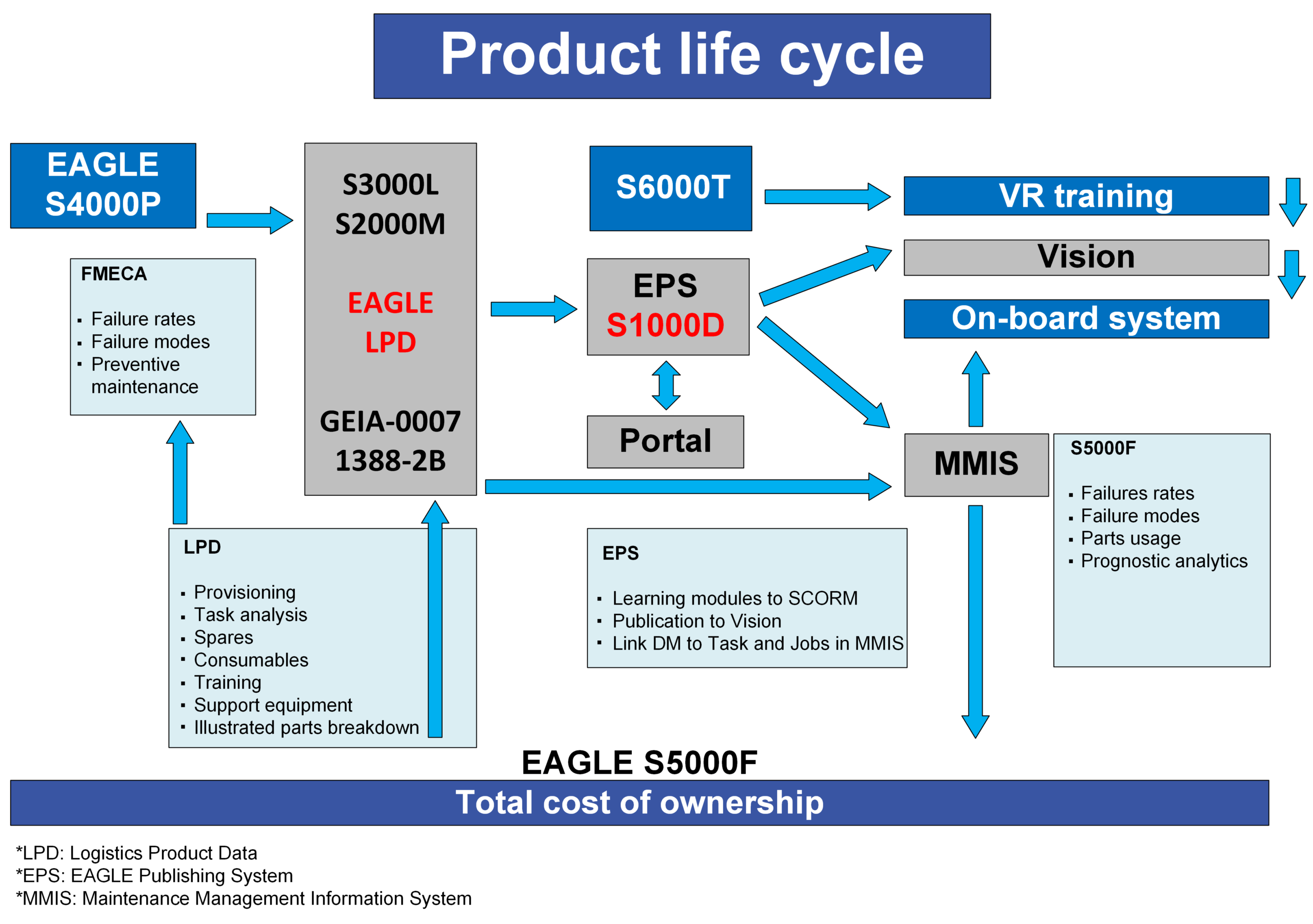
As the Canadian reseller of EAGLE Logistics Toolset, we know the value in providing our customers with the most up to date and effective tools for managing their logistics needs. The EAGLE Logistics Toolset (ELT) is designed to support programs throughout their entire lifecycle, from design and development to field operations and maintenance.
Our team of experts works directly with Raytheon to ensure that the software is simple to use and will meet all of your contractual requirements. We are dedicated to staying current with the latest federal and commercial specifications, ensuring that our products are cost-effective and compliant.
Whether it be Performance Based Logistics, S1000D, S3000L, MIL-STD-40051, or GEIA-STD-0007, our team has the knowledge and expertise to provide customized solutions to meet the individual needs of our customers. We are proud to offer Raytheon’s EAGLE Logistics Toolset (ELT) and are eager to help our customers improve their logistics support capabilities.
Raytheon’s EAGLE mission is to provide integrated tools to create, modernize and maintain products throughout their life cycle. Example of these integrated tools include:

EAGLE Logistic Product Data
The EAGLE Logistic Product Data (LPD) tool is a logistics system which uses a centralised database repository for the development of fully compliant logistics products for a wide range of military specifications, such as S3000L, GEIA-STD-0007 (Rev A & B), MIL-STD-13888-2B, and DEF STAN 00-60 (all issues) with DEF(AUST) 5692 in development.
EAGLE utilizes an indentured parts list/bill of material loader to generate a spec-compliant breakdown and can backfill LSA data as well as an ad hoc table interface for bulk loading and editing. A featured interface allows for tailoring information by way of cloning, referencing, or adding & editing records individually by functional area. Entire branches can be moved in a breakdown view of the project and entire breakdowns can be mapped to particular variants in a matrix view of the complete system.
EAGLE automatically builds all standardize logistics reports, exchange files, and integrates with the EAGLE Publishing System, or EPS, to flow LSA data into technical publications on a single database instance which meet the requirements of ASD S1000D and MIL-STD-40051.
EAGLE Logistic Product Data Features:
Ad Hoc
EAGLE Ad Hoc is a powerful reporting tool that allows users to easily create simple or complex SQL-based reports that can be tailored to extract data from EAGLE, EPS or MMIS. After an Ad Hoc query is executed, data can be updated on the fly, and new rows can be imported by cutting and pasting directly from Microsoft Excel. This feature allows you to cut and paste 1000s of rows into the database with a couple of clicks. Ad Hoc queries can also be stored in the database for future use.
Bill of Materials Importer
Creating your initial LCN structure can be complicated and time consuming, particularly if you are new to the concept of LCNs. The EAGLE Bill of Materials importer allows EAGLE users to easily transform indentured parts lists from Microsoft Excel into GEIA-STD-0007 or other LPD formats. Users can specify the LCN structure, format, and gaps, then preview what the LCN breakdown structure will look like before updating the EAGLE LDP database. Users can also select what LDP tables and columns to backfill and are provided with a report that highlights any potential data quality issues so that they can be corrected.
If you have a new LPD requirement, and an indentured parts list, the EAGLE BOM importer is the way to go.
Breakdown Navigation
EAGLE Breakdown Navigation is an intuitive tree-based application that gives users the ability to visualize a functional or physical product breakdown structure of the end items and systems that reside in the EAGLE LPD repository. Output can be viewed as an LCN breakdown, or Part Number breakdown and can also be filtered by Usable On Code (UOC). This feature is a must for programs that have several product variants. From the EAGLE Breakdown navigator, users can easily jump from any item in the tree to Provisioning, RAM, Task Analysis, Transportation, as well as documents and drawings.
Task Analysis
EAGLE Task Analysis gives users the ability to easily create and update all LPD-related task data in one module. Users can enter new task codes, add task frequencies, support equipment, provisioned items, mean man hours, annual operating requirements, facilities requirements, training requirements, subtask data, subtask narrative, work area codes, personnel, and much more.
Additionally, if your program has LPD and S1000D or MIL-STD-40051 requirements, task data entered the EAGLE system can be transformed into work pages or data modules with the click of a button. This feature allows for tremendous savings and excellent data quality and consistency because the task data developed for your LPD will now match your Tech Manuals.
Reliability and Maintainability
The EAGLE Reliability and Maintainability module allows users to manage all system reliability LPD information in one centralized system. Users can enter RAM data such as wear out life, logistics considerations, failure rates, maintenance and support concepts, item function information, system accessibility and training considerations, and mean time between failure information.
Additional product attributes such as failure and damage mode indicators and failure mode ratios can be documented, and Reliability Centered Maintenance results can be performed and stored in the database for use in maintenance task analysis related activities.
After RCM analysis is performed, failure modes can be linked with maintenance tasks, along with maintenance intervals, task types, and measurement bases for use in Task Frequency and Maintenance Repair rate calculations.
EAGLE Publishing System
The EAGLE Publishing System (EPS) is a Common Source Database (CSDB) which allows
users to manage technical publications in a standardized format (XML or SGML).
The EPS enables the user to author and manage their technical content with
built-in workflow and configuration management through an integrated XML editor
built in to the software.
EPS was designed by the Raytheon EAGLE team from the ground up to be fast, powerful, intuitive and robust. It incorporates many user requested features to facilitate rapid data production and includes program management functions that facilitate on-time production at minimal cost. Easy-to-use productivity tools and features assist the technical writers to produce and validate content quickly and accurately.
Eagle Publishing System Features:
Authoring
EPS includes a fully integrated SGML/XML editor with real-time what-you-see-is-what-you-get content view and navigation. The editor has the ability to search the database and assist the author to create references to internal and external objects, and it continuously checks the content for schema validity and conformance with the business rules, helping technical authors produce data quickly and accurately.
LSA Data
Utilizing LSA data in a technical publication is seamless with the EPS and the EAGLE LPD tool. This allows the existing data to be re-used and remain in sync with the technical publication. Engineering changes can be immediately incorporated into a publication using our "Build from EAGLE" tool.
Publishing
Included is a very powerful publishing engine which allows publications to be output in PDF or IETM format. The tailorable stylesheets allow for customized output to fulfill the demands of the customer.
Specification Support
The EPS supports S1000D, MIL-STD-40051 and MIL-STD-3001 as well as other specs such as the JSF 2.1 and the FSAF 3.0 specification. Our world-renowned EAGLE support will ensure that the latest version of each specification will be supported.
EAGLE Maintenance Management
With EAGLE Maintenance Management Information System (MMIS), inventory management extends beyond simple inventory tracking. Continuous improvement is the key to this system, and Raytheon has set up several standard practices that infuse inventory management with other disciplines such integrated logistics support analysis, reliability engineering, and configuration management. They know that the product life of a weapon system can span decades and monitoring reliability trends and diminishing suppliers is critical if they are going to exceed the operational requirements of their customers. Raytheon has developed a software system that unifies FRACAS, configuration management, preventive maintenance and inventory management.
With EAGLE MMIS, inventory items can be serialized or un-serialized and the configuration of these items can be tracked over time via the MMIS As Maintained Configuration module. Special care is taken to ensure that CAGE Codes, Part Numbers and National Stock Numbers are controlled and approved by the proper engineering authority. If the contractor chooses, these part numbers can be tracked in MIL-STD-1388-2B or GEIA-STD-0007 repositories to ensure conformance to standard logistics support analysis practices. Software and firmware configuration can be tracked and parts can be categories and consumables, test equipment, repairable, and long lead items.
Maintenance Management Features:
Inventory Tracking
Inventory can be tracked geographically to the site/location/shelf and bin level and every material movement transaction is recorded for audit purposes. Inventory condition and value can also be recorded. Barcoded items can be registered in the MMIS inventory system and IUID labels can be created in various formats. As material is shipped between sites and locations, shipping and receiving documents can be created for audit purposes and applicable shipping documents such as DD1949s or DD1348s can be created.
Inventory Analysis
Inventory criticality and lead time can be stored and if required, economic order quantity analysis can be performed for each inventoried item. Reorder points and minimum stock levels can be monitored, and rolling-through-time calculations can be performed if demand metrics are available. Failure rates and mean time between failure data can also be associated to each inventoried item.
Maintenance
Scheduled (PMCS) and unscheduled maintenance can be strategically planned and executed using the MMIS Workflow system. Preventive maintenance schedules can be created and applied to applicable inventory based on various triggers such as calendar days, operation hours, or other customizable measurement bases. Maintenance performed by field service representatives can be monitored and requests for spare parts can be easily dispatched.
Workflow
Standard workflow operations (or routes) can be assigned to parts that enter the depot for repair. Condition code and status can be recorded for each WIP item and metrics such as Repair Turn-Around Time, Operational Availability, and Mean Time Between Failures can be calculated. Standard performance metrics such as touch labor estimates can be recorded and compared with actual labor hours and applicable support equipment, required conditions and consumables can be attached to each maintenance task that is performed. Work instructions can be created and attached to operations in MMIS for reference. Documentation such as shipping and receiving forms, maintenance actions forms, certificates of conformance, and failure data can be attached to each work order for future reference.
Remove and Replace Procedures
Every remove and replace procedure can be logged for future reference. Defective component and root cause analysis can be performed on repaired items as they move through the depot. This information can be synthesized use by reliability engineers for FRACAS reporting. If defect trends are identified engineering changes, training requirements or process changes can be presented to all stakeholders via a Failure Review Board or similar processes. If engineering change orders are created, MMIS can manage the incorporation of those changes.

EAGLE Vision
EAGLE Vision is an IETM viewer, similar to the EPS Previewer, that can display hyperlinks to other objects such as paragraphs, steps, graphics, tables and other data module content. In contrast to the EPS Previewer, EAGLE Vision has been created as a web-based application that can view publications without the need to have EPS installed.
With this portable solution you will be able to use any device, with access to the remote server, to view IETM’s which have been deployed by the builder application.
The EAGLE Vision viewer supports all types of data modules currently supported by the EPS Previewer. This includes graphic formats such as CGM and SVG without the need for any third-party plugins. Linking and viewing hotspots is also supported, as well as downloading IETM’s for offline viewing.

EAGLE Portal
The EAGLE EPS Web Portal is a simple to use web application that gives customers and end users a fast and easy way to review S1000D data modules, publication modules, and entities. This greatly reduces the amount of time needed in the review process by giving specific users access to view the data and publication modules.
Users with access to a project can view the associated data and publication modules in both PDF and Interactive Electronic Technical Manual format. They will have the ability to locate specific data modules and publication modules by using the Finder Filters, which help narrow down any search results. Users will also be able to post comments on each data module/publication module, as well as upload any additional attachments such as Microsoft Word documents, images, and annotated PDF’s.
The author will be able to see these uploaded attachments immediately and proceed with any suggested changes left by the reviewer.

Training and Services
Introduction to the EAGLE Logistics Product Data
This course introduces students to the Enhanced Automated Graphical Logistics Environment (EAGLE) Logistic Product Data solution. It includes the fundamentals of Integrated Logistics Support and Logistic Support Analysis. The EAGLE client is used in a workshop setting to develop logistics data and produce sample output reports and files. The training can focus on the logistics product data standard of choice; MIL-STD-1388-2B, DEF STAN 00-60 or GEIA-STD-0007.
Introduction to EAGLE Publishing System
This course instructs students in how to use the EAGLE Publishing System to create valid technical data. The training can focus on the technical data standard of choice ASD S1000D or MIL-STD-40051-1. Topics covered in the core training include: ASD S1000D, structured XML authoring, creating projects, creating and validating data, workflow and roles, exporting data and publishing. Additionally, the training can include exercises in the use of EAGLE LSAR data to automatically generate procedural and Illustrated Parts Data Modules. The course ends with a collaborative workshop that consolidates the information learned and provides a roadmap for production projects.
Follow-up consulting is offered and recommended. Our knowledgeable and experienced instructors can provide detailed advice and assistance to programs to establish production projects. This can give projects a head start and avoid the necessity to re-work data in the future.
EAGLE Maintenance Management Information System
The purpose of this training course is to familiarize students with using the Maintenance Management Information System to capture and utilize contractual data requirements in the depot repair process. Topics covered include Engineering Change Proposals, Lessons Learned, AsBuilt/AsMaintained Configuration Management, Inventory Management, Contracts, Document Management, Failure Reporting and Corrective Action, and Traveler/Workflow Management.
These are all common functions of both Contract Logistics Support and Performance-Based Logistics contracts used in the aerospace and defense industry which are vital components in process improvement, quality, and superior system readiness. This course also provides an overview on how the Logistics Support Analysis Control Number is used in EAGLE to model a hierarchical parts breakdown and how that breakdown is used in MMIS in the context of FRACAS and AsBuilt configuration management.
Contact us to receive a quote
For more information, or for a free quote on your next project, please do not hesitate to reach out to us.

Sonovision Ortec Group to be a Major Sponsor at the 2022 S1000D User Forum
March 15, 2022
read more...Forum Innovation Aérospatiale 2018
March 16, 2018
Sonovision to exhibit on April 16th and 17th at the Forum Innovation Aérospatiale organized in part by Aero Montreal and the National Research council of Canada. Please stop by our booth to see how our Technical Publications solutions can help your business.
read more...MRO
March 2, 2018
Sonovision will be attending the Maintenance Repair and Overhaul (MRO) Americas happening from April 10th to April 12th in Orlando Florida. Contact us to make an appointment.
read more...ADSS
February 14, 2018
Sonovision will be exhibiting at the Aerospace & Defense Supplier Summit on March 27th and 28th. Come see us at our booth to find out about our new S1000D solutions.
read more...